

Back pain is one of the most common ailments in working adults and studies have found that up to 80% of individuals experience some form of back ache or pain throughout their lives.
The human back is an incredibly complex structure comprising of the interlinking vertebrae bones of the spine, cartilage discs, muscles, tendons and nerves. Ours back plays an integral role in providing upright posture, supporting movement of our limbs, as well as connecting our upper and lower bodies together. It is therefore understandable that any problems with our backs can have a debilitating impact on both our physical and mental wellbeing.
Common Symptoms of Back Pain Include:
- Dull, Aching Pain
- Radiating Pain down the buttocks, legs and feet.
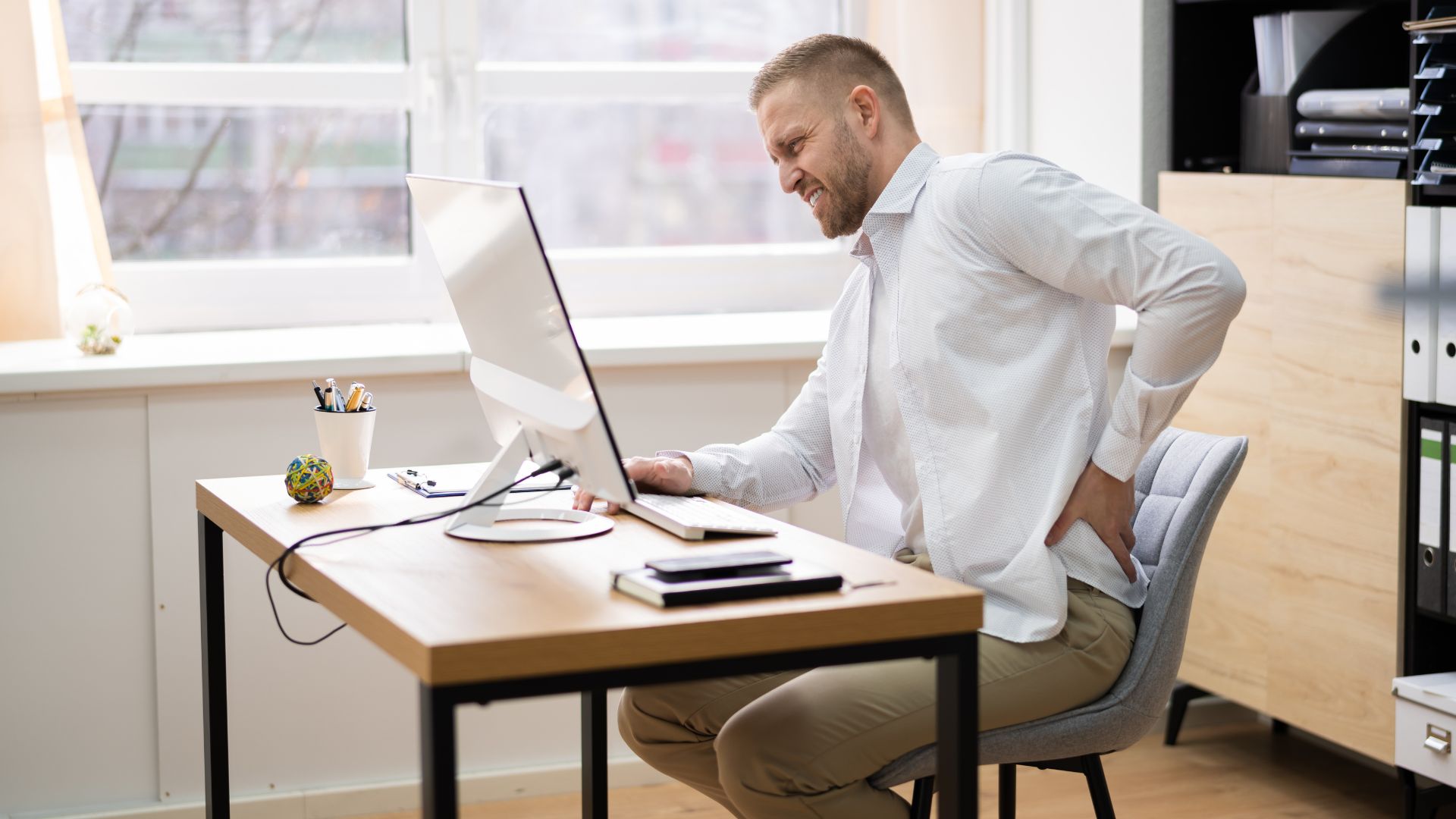
- Pain and discomfort with prolonged sitting.
Managing chronic lower back pain is not easy, as there are numerous different factors that can contribute to the onset and persistence of pain.
What can however assist in the pain management process is a firm understanding of some of the most common causes which can contribute to back pain.
The following are three most common factors that can contribute to back pain at work:
1. Force
Exerting too much force on your back, such as by lifting or moving heavy objects, can cause injury.
Solution: Lift properly! When lifting and carrying a heavy object, lift with your legs and tighten your core muscles. Hold the object close to your body. and maintain the natural curve of your back. Don’t twist when lifting. If an object is too heavy to lift safely, ask someone to help you.
2. Repetition
Repeating certain movements, or overuse, especially those that involve twisting or rotating your spine, can injure your back.
Solution: When available, use lifting devices to help you lift loads. Try to alternate physically demanding tasks with less demanding ones. If you work at a computer, make sure that your monitor, keyboard, mouse and chair are positioned correctly. If you frequently talk on the phone and type or write at the same time, place your phone on speaker or use a headset. Avoid unnecessary bending, twisting and reaching. Limit the time you spend carrying heavy briefcases, purses and bags.
3.Inactivity
An inactive job or a desk job can contribute to back pain, especially if you have poor posture or sit all day in a chair with inadequate back support.
Solution: Pay attention to posture. When standing, balance your weight evenly on your feet. Don’t slouch. To promote good posture when sitting, choose a chair that supports your spinal curves. Adjust the height of your chair so that your feet rest flat on the floor or on a footrest and your thighs are parallel to the floor. Remove your wallet or cellphone from your back pocket when sitting to prevent putting extra pressure on your buttocks or lower back. If you must sit for a prolonged period, change your position often. Periodically walk around and gently stretch your muscles to relieve tension.

2. Repetition
Repeating certain movements, or overuse, especially those that involve twisting or rotating your spine, can injure your back.
Solution: When available, use lifting devices to help you lift loads. Try to alternate physically demanding tasks with less demanding ones. If you work at a computer, make sure that your monitor, keyboard, mouse and chair are positioned correctly. If you frequently talk on the phone and type or write at the same time, place your phone on speaker or use a headset. Avoid unnecessary bending, twisting and reaching. Limit the time you spend carrying heavy briefcases, purses and bags.

3.Inactivity
An inactive job or a desk job can contribute to back pain, especially if you have poor posture or sit all day in a chair with inadequate back support.
Solution: Pay attention to posture. When standing, balance your weight evenly on your feet. Don’t slouch. To promote good posture when sitting, choose a chair that supports your spinal curves. Adjust the height of your chair so that your feet rest flat on the floor or on a footrest and your thighs are parallel to the floor. Remove your wallet or cellphone from your back pocket when sitting to prevent putting extra pressure on your buttocks or lower back. If you must sit for a prolonged period, change your position often. Periodically walk around and gently stretch your muscles to relieve tension.
Other than identifying the underlying causes of chronic back pain, there are numerous steps that can be taken to help prevent the condition from worsening:
- Exercise
Regular low-impact exercise, that does not over strain or jolt your back, can increase strength and endurance in your back and allow your muscles to function more efficiently. A specialized core strengthening program can also be highly beneficial in severe cases. Walking and swimming are also good choices. - Build muscle strength and flexibility
Abdominal and back muscle exercises are very effective in improving overall core strength and providing efficient movement of the spine. Regular core strengthening exercise combined with both dynamic and static stretching can help improve posture and reduce abnormal back muscle tension. - Maintain a healthy weight
Being overweight places additional strain on the back muscles. If you are overweight, a decrease in body fat and BMI can help prevent back pain.